Friday, 18 May 2012

Gardens and Indian Cooking

Any Indian housewife who can cultivates some kind of garden. In Indian culture, flowers are not just for fragrance, but for worship and for cooking! These jasmine might make a nice offering, or could be used to flavor tea.

I am about to plant my summer vegetable garden, but I still have some lovely mustard greens that I use in the kitchen (recipe to come):
Like many winter vegetables, mustard greens are quite easy to grow and absolutely delicious (but a bit sharp) in salads. Once they're cooked, they acquire an almost sweet flavor. I like to saute mine with onion, garlic, ginger, and some other spices.

I keep meaning to experiment with vegan lavendar ice cream. We have gobs and gobs of lavendar this year, and I adore both the scent and the flavor. Apparently the trick is infusing the lavendar flavor into the sugar. The bees are absolutely loving the lavendar. If I weren't terrified of bees and was very crafty, I'd find where they lived. Last summer when we were in the South of France for our friends' wedding (I know, tough life), I bought the most lovely miel de lavande (lavendar honey). Yeah, that did not last long. Not long at all.

Probably the most important flower in Indian cooking is the rose. I love roses. I come from a very long line of rose gardeners (my dad in particular is a fanatic). I favor roses with a very pronounced scent, like Double Delight.


Then I have this other rosebush that was labeled as a Double Delight, but I don't think it is. It is far too pink, and although it has an incredible fragrance, its scent is subtly different from the Double Delight. Anyone know what it is?


Rose is used to flavor all manner of desserts. I make a mean kheer, but I make it with cow's milk. I am working on a vegan recipe, and once I perfect it, it will appear here.

So what is my favorite plant in the garden? That's easy. I adore sweet peas. Last year I had quite a crop, but this year, they're struggling. Still, they are so prim, and their fragrance is just so amazing. Someday, someone is going to figure out how to infuse that scent into a dessert, and then I will swell to the size of a small dwelling.  I will be reporting more on my garden as my summer crop comes along. I am planning tomatoes, eggplant, marigolds, lemon cucumbers, and a variety of squashes. Yum!

Thursday, 17 May 2012

The Two-Minute Comfort Food (the Ultimate Mug Cake)

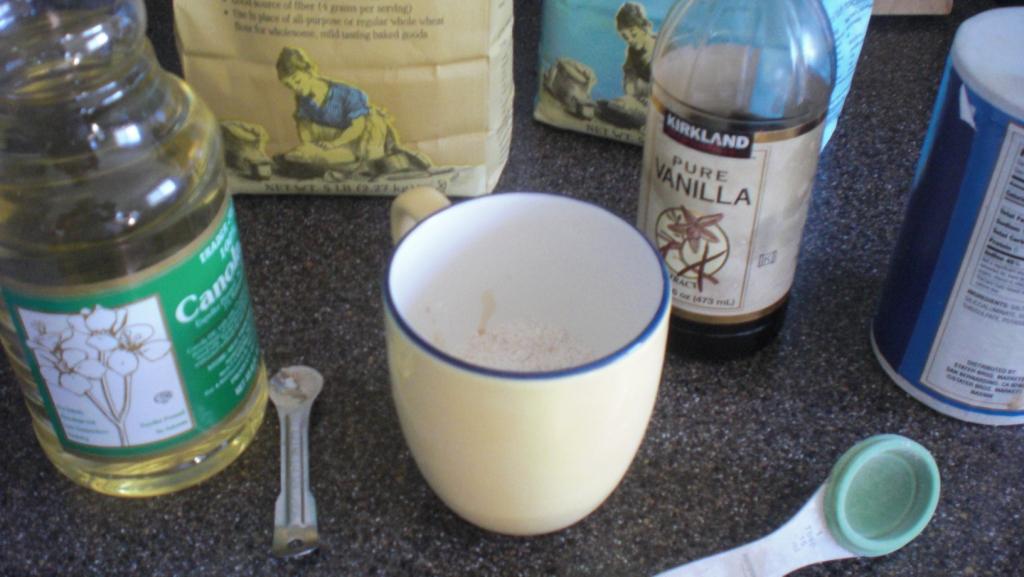
Okay, so I know this isn't exactly Indian. But Indians eat cake, too. I promise. I have an incurable sweet-tooth, and I have been experimenting forever with mug cake recipes. The idea of the goodness of homemade cake never more than two minutes from my grasp is a siren's song--it's like, better than alchemy. Who needs to turn base metals into gold when you could have fresh, hot cake two minutes from whatever time you decided you wanted it? It seemed too good to be true. I had never exactly found one that was entirely to my satisfaction. They all lacked the yumminess of a real cake. "Well, duh," you might say. "You bake it in the microwave." I know, I know. But after years of experimentation, this is it. I would rather eat this two-minute mug cake than most cakes available for purchase. Once you try it, you'll believe!

Mix
1 tablespoon of wheat flour
1 tablespoon of white flour
1 tablespoon white sugar
1/4 teaspoon of baking soda
and a pinch of salt

in a mug:

Add:

1/4 tsp vanilla
1 scant tablespoon canola oil
2 tablespoons of almond milk (yes, you can use regular milk, too)

Mix and add a generous tablespoon of vegan (or not) chocolate chips:


Mix again and microwave for 45 seconds:


Cake. Vegan. Moist. Delicious. Whenever you want it.

Palak Dal (Saag Dal) or Spinach and Yellow Split Peas

So when I tell you that Indian food can be healthy, I mean it. This dish is full of things that are good for us, but you wouldn't know it to taste it. It is also crazy easy to make and ready in under a half an hour. It makes a meal in itself, but you can also serve it with brown rice.
Here is what you will need


one large yellow onion, roughly chopped


2 tablespoons of canola oil
1 teaspoon cumin seeds
1 teaspoon black mustard seeds
1 teaspoon salt
1/2 teaspoon turmeric (these are generous half teaspoons)
1/2 teaspoon cumin powder (again, generous)
1/2 teaspoon red pepper powder

Saute in the pressure-cooker until the onions start to become translucent.

Add three heaping cups of fresh spinach (which is what I had today, but you can use a geneous cup of frozen spinach, too) 

Saute until the spinach cooks down quite a bit:


Add 1 tablespoon of coriander powder, 2 small roughly sliced tomatoes, and one heaping cup of yellow split dal and saute the whole mixture for about a minute or so:


Cover this with three cups of water, seal the pressure-cooker and cook on high for 18 minutes.

Take the lid off, add a squeeze of lemon, 1 teaspoon of garam masala, and check for salt (mine usually needs a pinch). Garnish with fresh coriander (cilantro) if desired. Serve on its own or with rice.


Serves 4-6.

Basic Mango Chutney

The grocery stores these days are well-stocked with red mangoes (nearly all of them from Mexico). One of the more depressing things about the culinary scene in these United States is our lack of mango varieties. The word for mango in Hindi is ahm. Ahm is also a word for "common" or "good." This tells us something about status of mangoes in Indian culture, I think. There are dozens and dozens of varieties of mangoes available this time of year in India. When I think of how wonderful and delicious and multifarious they are, and then I compare them with the sad green-red things in our grocery stores, it depresses me.

The Indian grocery stores aren't much help here, as there are laws against importing things like fresh mangoes halfway around the world. Some of those restrictions have gotten a bit little laxer, but still, to experience a true mango, one must have a passport, I'm afraid.

But let's not let our despair consume us. Some of those red mangoes are delicious! The trick is picking out a good one, like the one shown here:


You are looking for color (not a lot of green on this one), firmness (it should give a bit when you give it a squeeze, but it shouldn't be mushy), and smell (if it doesn't already smell vaguely like a mango, don't take it home--it's an imposter!).

You'll want to peel it and cut all of the yummy, brightly colored, beautiful mango-flesh off (I find that the mango slicers just don't do the job) and put it in a food processor.


Then, you'll add 1 heaping tsp of cumin (you can go with a little less if you don't like things too spicey)
1 tsp (or to taste) red pepper (this will make it hot, so you may want to go with less)
1/2 tsp (or to taste) salt

Puree.

Voila, a fantastic, delicious, mango chutney that goes with everything. We eat this as an accompaniment with many meals, but it goes especially well with theplas (coming soon to this blog). It would also work very well as a dip for tortilla chips at your next party.

Wednesday, 16 May 2012

Flaxseed and Blueberry Chilras (Pancakes)

Okay, so flaxseed and blueberries are maybe not the most commonly used Indian ingredients, but the chilra is most certainly an Indian dish. My mother in-law makes the most delicious sweet chilras for breakfast. These are just a little bit healthier for the addition of blueberries and flaxseed meal. Here is what you'll need:

3/4 cup whole wheat flour
1/4 cup flaxseed meal
1 tsp baking powder
1 tsp salt
1 T brown sugar or maple syrup (I like the maple syrup)
1/4 cup canola oil
1 and 1/4 cups almond milk

Mix all of this together:

Add 2/3rds of a cup of blueberries, gently mix, and then cook the chilras like pancakes in a frying pan on medium heat. Make sure that you spray the pan with non-stick spray every so often or they will stick.


Enjoy them with maple syrup, honey, fresh berries, and/or powdered sugar!


This recipe will yeild 8-10 chilras, depending on how big you make them. If you're not so into the vegan thing, you can make them with cow's milk, but don't use eggs. They are right out in Indian vegetarian cooking, and they will change the consistency of the chilra.